Bouquets, Mixtapes, and Anthologies: Collected Theology as a Way Forward.
Towards a new way.

Classic Christian theology tells me I am fearfully and wonderfully made in the Imago Dei.
There is something in my very being that (at the very least) reflects the image of God. God, we’re told, is beautiful and glorious; therefore, there is something in me, in my creation that reflects this truth.
But then I look in the mirror.
I don’t see beauty and glory reflected there. What I see is something I don’t want to, something ugly, something disfigured, something that needs to utterly and completely be transformed in order to be called beautiful and glorious.
My experience doesn’t line up with what I was told is the truth.
So, I have to make it work if I’m going to continue believing. I’m forced to mentally perform gymnastics to understand how I am in the image of God, who is both beautiful and glorious, when I don’t recognize that in myself at all. I don’t see God in myself, and I don’t see myself in God. So how do I believe when it’s not what I experience?
The easiest way is to say that Imago Dei is a spiritual matter. Spiritually, I reflect God’s image. Okay, but what about my body? Do I just accept that I am ugly and deformed? Do I just give up on ever learning to love myself the way I am? After all, what’s really good—don’t we equate beauty and goodness after all—is spiritual, so my physicality simply doesn’t matter?
I end up giving up on the goodness of my body because I can’t reconcile my experience with the teachings of the church. I still see myself distorted in the mirror, only now I lose hope that it will ever change. I remain trapped in my hell with no hope of rescue.
Christian thought doesn’t always line up with the experiences I have in myself, in my life, in my body. What I am, the stuff that makes up my Self that experiences the world, is too often shoved into a closet because it’s just too messy to exist beside a polished, clean, neatly ordered, systematic theology.
I am told that my experiences are wrong and I just need to understand them differently. So, I gaslight myself on the altar of theology to perpetuate the flame of intellectual control. I convince myself at best that I just don’t (or can’t) understand the truth of this theological teaching, or (at worst) I come to believe that I am flawed, the exception to the rule, and that there is something inherently wrong with me.
This is what I was given well into my twenties.
This is theology as poison.
Weaponized against the body and the truth of the chaos and mess that is life, theology wielded this way could maybe make good little solders in the Lord’s army, but it does nothing for the suffering, nothing for the pain that is existence at times, nothing to help navigate the reality of a messed up world that is full of heartache, beauty, cruelty, and joy.
There has to be a better way, a way into healing, a way back to ourselves, a way to connect our bodies with the truth of joy and sorrow we live in and the existential experiences we feel.
We are an embodied people; we need an embodied path towards theology we can call good. But my embodied experience isn’t yours. You may not experience dysphoria, and I might not experience what haunts your thoughts about your body. And anyway, even if we had the same experiences, our embodiments, the living out of those experiences, are vastly different because each of ourselves is vastly different.
The theology I need may not be the theology you need.
I have come to believe that theology—how we think about our experience of divinity—isn’t one-size-fits-all. I reject systematic theology as the best way to think our thoughts about God. I don’t think that someone else can explain God’s actions and being to me and it truly make sense because the way I experience the cosmos, myself, other people, and God is uniquely mine, just as yours is uniquely yours.
When our theology belongs to each of us, there is a restoration of our faith. By claiming an embodied theology that matters for me, repair can happen from the damage that weaponized theology has inflicted.
We don’t—we can’t—hold all of everything about God and faith at once. It’s too much. And let’s be honest, it doesn’t all matter to us at any given moment. What if we could take what we need and leave the rest? What would happen if we gave ourselves permission to not believe a systematized order of theology, but instead to gather what we needed for this moment, for this trauma, for this healing?
Collected theology is a gathering of bouquets of belief that serve us for this time in our life. We go into the fields of divinity and glean what we need from the wildflowers of the being of God and our lived experience of faith. Holding onto what we have harvested, we let the bouquet’s fragrance permeate our inner home.

But wildflowers don’t live forever, and neither does our theology remain static. When parts of the collection—or the whole thing—stop serving us, we head back to the fields to gather afresh a new bouquet. It might be slightly different than our last one, or it could be a whole new flora scheme. Either way, it is the theology that we can embody in this season of our life.
If it sounds like I’m saying what’s true for me may not be true for you… well, yes. And no. Of course, there can be objective truths, even about divinity. Things like love and kenosis do more than shape our experience of God. They tell us about the God we are experiencing. But a few fundamental truths do not create a theology that we all must goose-step into file and rank.
The beliefs that connect with me, that move me in this season of life, aren’t going to be the ones that move me forever. Just like a mixtape, what I emphasize now, what I believe in this moment, is a snapshot of what it means for me to be alive in this time and place.
Growing up, mixtapes were a thing of art. Carefully curated songs for a particular person or event, they stood as a soundtrack to that experience. When revisited, the memories of that time flood back, and we can relive the joy and sorrow that intersected in our lives. Theology as a mixtape does the same. The theology I collect to help me heal from this wound, help me suffer through this event, help me break into doxology over this good… all of these are snapshots of how we are making sense of our lived experience of faith right now. It’s going to be different in the future, but this is how I believe right now.
And it’s okay to catalogue and save those mixtapes, even as we may move on from them. We may return for memory and nostalgia, or for reorientation to the beliefs that carried us through. We may even find ourselves back in the cycle that birthed that collection of theological need. Whatever the reason, our memories, journal entries, souvenirs, and photographs from that time create altars of remembrance, mixtape catalogues that tell the story of where we have been.
The heartbeat of collected theology isn’t a system of believing, a set of final truths, or a confession we can forever return to . The core of collected theology is our lived experiences of the faith we are choosing to believe. With room for evolution, collected theology allows us to breathe theologically, and trust that the Spirit leads us, that Jesus holds us, and that the Source calls us very good not because we got our doctrine and theology right, but because we are beloved through and through.
As beloved, we are free to explore what it means for us to believe as we need to. And this is the point of the practice of collected theology. To put plainly, collected theology is the self-directed choosing of theological ideas, images, and frameworks that fit the life that is being lived at this moment, with its wounds and joys. It is a rhythmic practice of holding these things as long as they are needed, releasing them when they no longer serve the embodied practice, and returning to gather again as often as necessary.
Our lives are collections of experiences, times, and seasons that change, morph, and evolve as the world around us changes and we change with it. It doesn’t make sense to have the same theology when you are in your early twenties as you do in your mid-forties. Our core may be the same, but the way we express ourselves, what we need, and how we live has grown and changed. Sometimes, though, there are themes we return to over and over. There are things that define our lives.
One of those things for me is death. My mom’s death when I was two has set a theme in my life that has been followed by friends and family. I have lived close to death. The theology I gather around this topic is something I return to and build on. Much like an anthology. I collect words, images, and even songs that help me cope, understand, and accept the grief and lament that comes every time I lose someone else to death’s sting. Each time I wrestle with this theme in my life, I return to all I have already gathered, and I add to the anthology, creating volumes and editions of a collected theology around death.
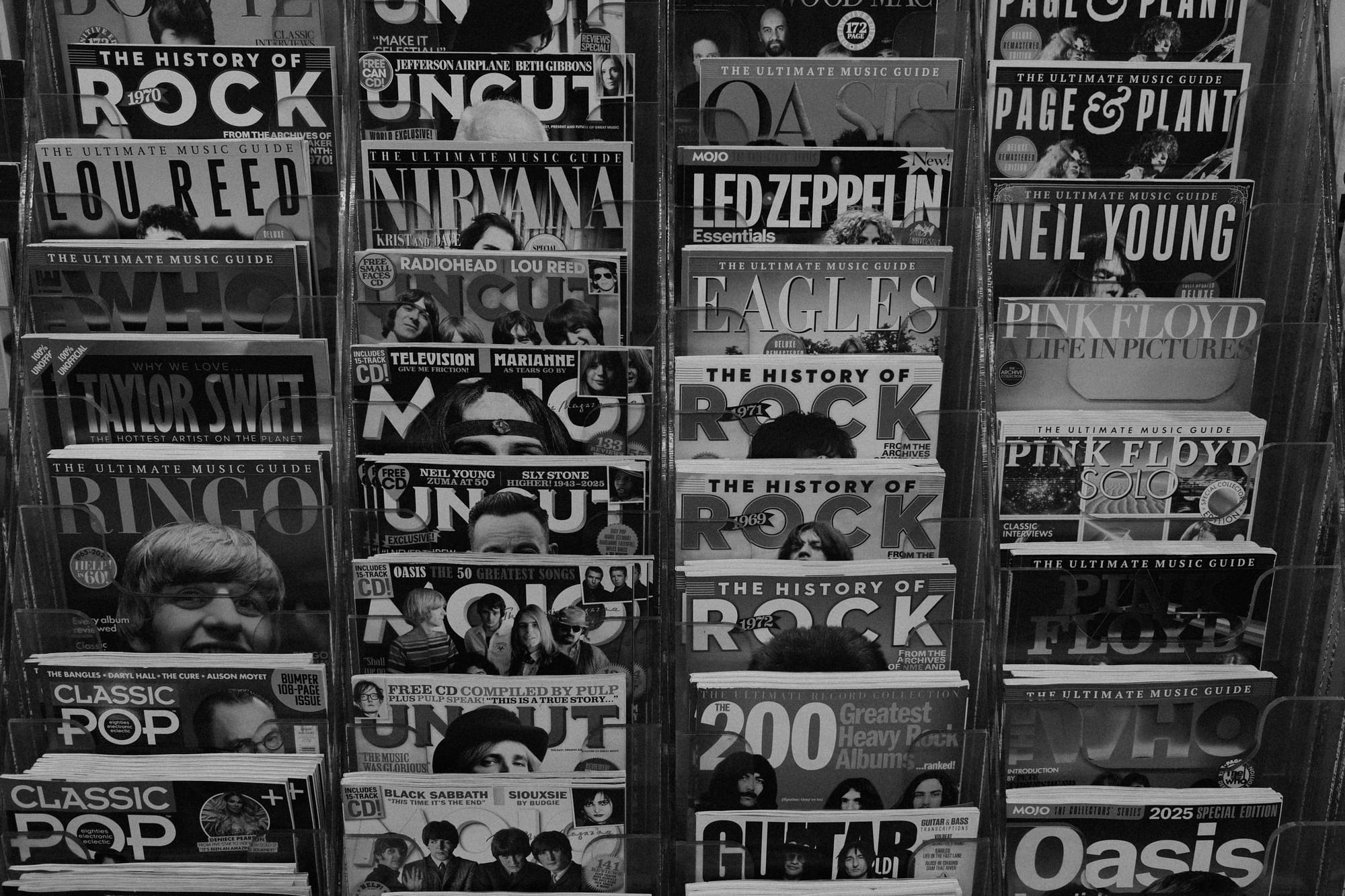
The themes we return to, the things that haunt us, are worth building on. We collect things that help us come to terms with the ways we embody these themes. We build out ideas and concepts that come to have new meaning for us at different times in our lives. We create a library of thematic collected theology that we return to, edit, add to, and shelve as needed.
This is all the practice of collected theology. Bouquets, mixtapes, and anthologies of theological concepts, images, and statements are the way we navigate a faith that is embodied, something that makes sense for our changing lives, our growing questions, our healing wounds. We are not a static people, so why do we strive for a static theology?
Classic Christian theology may not be what serves us in our embodied lives. That’s ok. We don’t need to follow old paths when we have new questions. We are not supposed to be formed into uniform believers by theology. We are invited to explore, navigate, and grow in the way we think about our experience of divinity.
Collected theology is a practice that is designed to free us from the gatekeepers that tell us there is only one way to believe, one way to think about God, one way we have to conform our experiences to in order to be believers.
If we choose to believe, we are believers. The real question is what belief are we embodying.